

Hollywood Ending by John Green
I’ve been reading this author since the 2010s. What did I think of Hollywood Ending by John Green and should you read it? Let’s discuss!
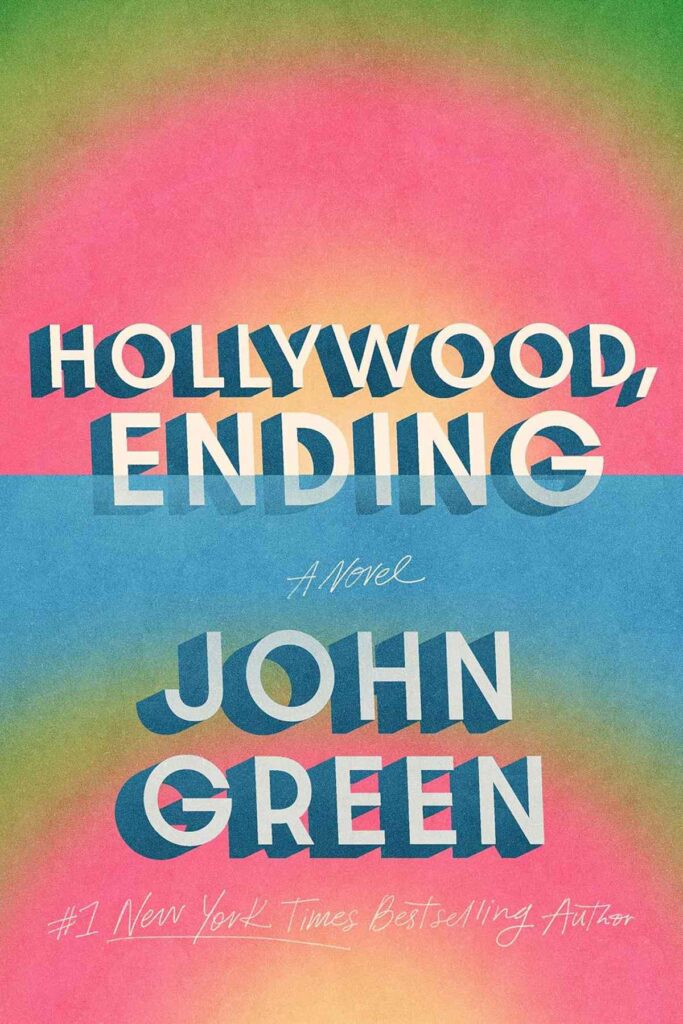
Hollywood Ending by John Green
Publication date of Hollywood Ending by John Green: September 22, 2006. I borrowed this book from the library.
I read ALL the John Green YA books in the 2010s (Looking for Alaska (2005), An Abundance of Katherines (2006), Paper Towns (2008), The Fault in Our Stars (2012), plus his collabs, Will Grayson, Will Grayson (2010) and Let it Snow (2008).)
I saw the Paper Towns movie (and wrote a Paper Towns book vs movie comparison) and the TFIOS movie. I wrote a post about what happened after TFIOS and a post about the “Sick Lit” trend sparked by TFIOS.
Then I moved on. Green’s YA books started to fee pretty formulaic to me. In addition, as YA moved on with the #OwnVoices movement and more awareness around social issues, some of them are products of their time, and not in the best way.
But when I heard that Green had a new “adult” book, I was curious. So I read Hollywood Ending (or rather Hollywood, Ending. Titles with commas are a BAD idea for search and SEO. So I’m ignoring that pesky comma. )
Before we move on:
My take on the John green Ya formula
- Somewhat awkward, whip-smart guy characters.
- Slightly madcap, larger-than-life girl characters who are worshipped from afar by #1.
- Witty, whiplash-inducing dialogue that takes place between #1 and #2.
- A quest: finding Margo, tracing down Peter van Houten, proving the Theory of Underlying Katherine Predictability, making sense of Alaska’s actions.
First off, is Hollywood Ending by John green Really an Adult Book?
Hmmmm…. the two main characters are twenty-one and twenty-two. Kai is a newcomer to Hollywood in his first role, while Juniper is twenty-two, but has acted for a long time. A former child star, she’s trying to transition to adult roles.
While Hollywood Ending is technically an adult book, I felt that a lot of the themes and plot lines (which mainly included coming to terms with the shortcomings of the adults and parents in your life, felt more New Adult to me.)
What I did love about Hollywood Ending:
The story within the story of the book (i.e. the plot of the movie that Kai and Juniper are starring in together) felt so fully realized I was ready to check the release date.
The movie is a biopic on Andy Warhol. I’d watch that movie! I went to the 2018-2019 Andy Warhol exhibit at the Whitney Museum in New York, and came out of it with a much greater understanding of him.
I was also fascinated with Green’s (implicit) take on Hollywood, and also on fame.
At least four of Green’s books have been made into movies, so he definitely has had an inside look at the Hollywood machine. Many of the actors in those films have been in their early twenties, the age of the main characters in Hollywood Ending.
Green is also fairly famous himself, and he (and his brother) have had to face some public scrutiny over the years, so I felt some of the books insights could have been personal.
What I loved less:
At times I felt frustrated in my attempts to understand Kai and Juniper. Each had a major struggle that could have been its own book. I felt that Juniper came off more fully developed, while I had a LOT of questions about Kai and his past.
Juniper’s public struggle was to reshape her career, and her more private one was trying to work through her relationship with her overbearing stage mother.
Kai was convinced that his limited acting experience was going to ruin the movie. He’d also had a horribly traumatic incident in his past that I didn’t fully understand yet was a pivotal part of the story.
To me, Juniper kind of took over the story and squished Kai to the side, which is a pattern in Green’s YA: a magnetic, charismatic female character that the male character idolizes, yet struggles to understand and co-exist with.
Minor quibble:
What was WITH the overuse of the word “proper” and “properly” in this book. I counted it being used (in the British sense, as in “I’m a proper actor now”) at LEAST 16 times. Did anyone else notice this? Juniper uses it first and then it is EVERYWHERE.
All in all, I do think that John Green’s current and former fans will find this a slightly aged-up version of his winning formula. I enjoyed reading the book, especially the Hollywood movie parts!


